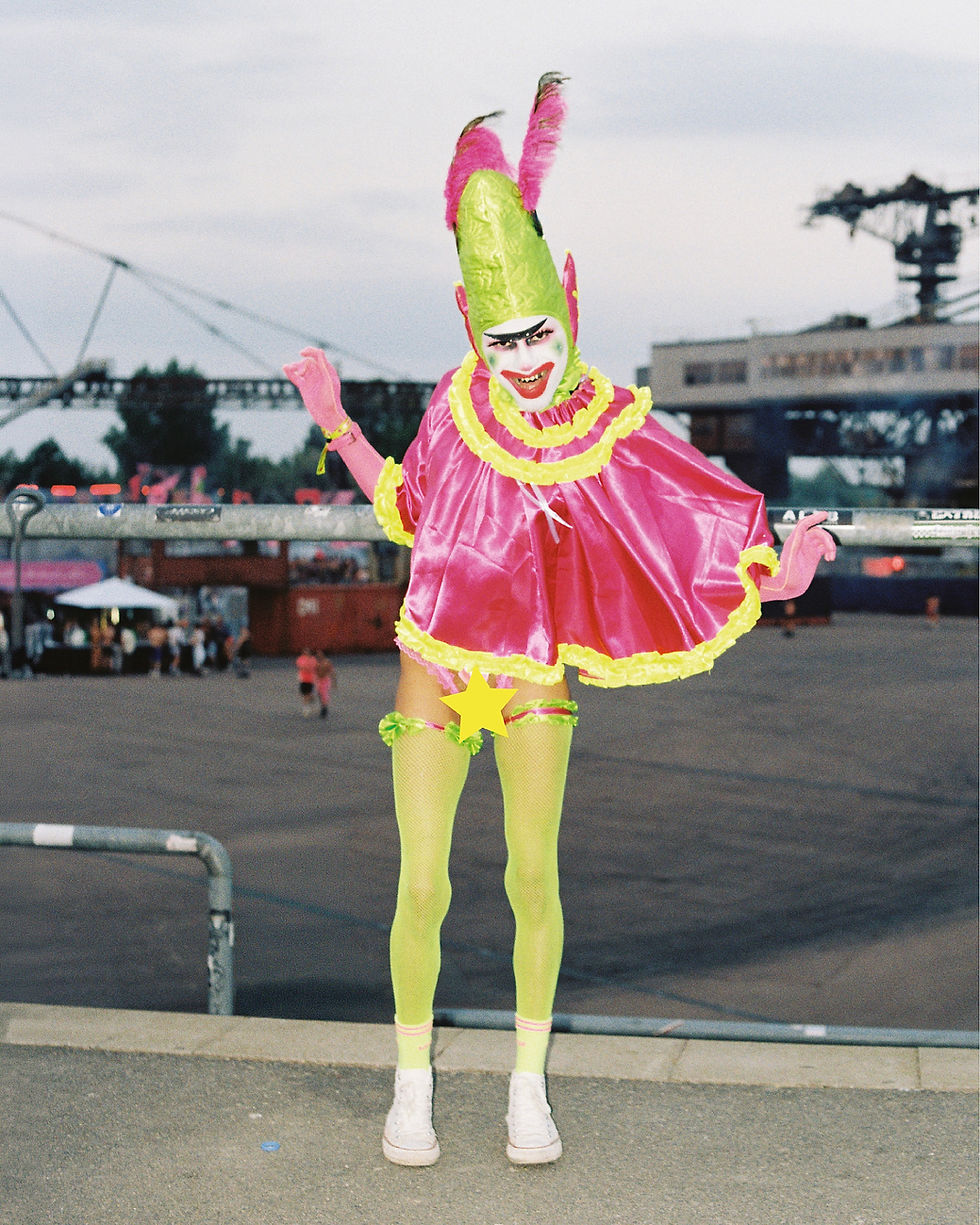
Vetor Interviews: Alma Negrot
Updated: Feb 13
In a scene where performance and politics are inseparable, Alma Negrot has spent more than ten years reshaping the landscape of Brazilian queer underground culture
Text and Interview by Efe Çilek
Photography by Batıkan Kılıçaslan
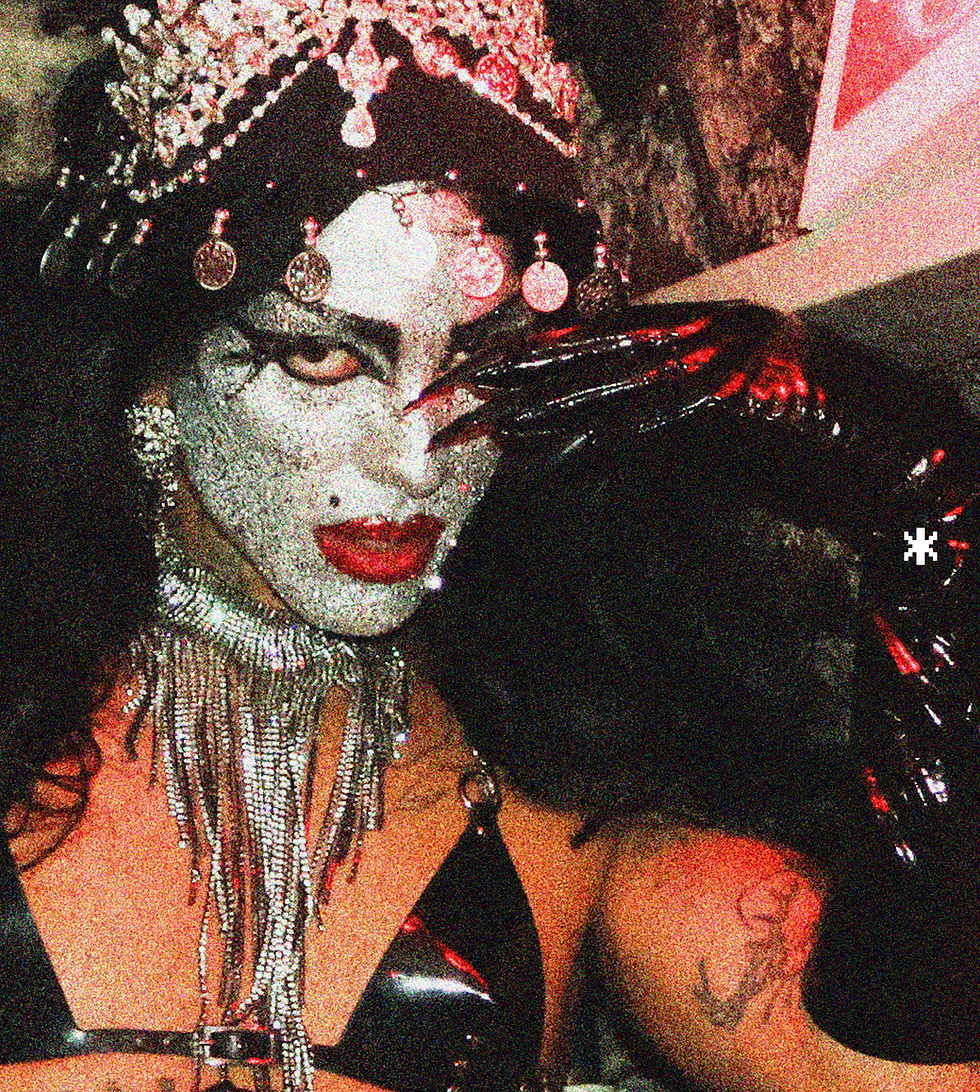
In São Paulo, Raphael Jacques' multidisciplinary vision encompasses drag, DJing, makeup, and image-making, all driven by a restless desire to transform. Alma Negrot emerges from what's been cast aside and overlooked. Drawing from both punk and club scenes, Negrot channels references like Bettie Page, Elke Maravilha, Grace Jones, and Leigh Bowery, ultimately transforming these influences into a vision that's emblematic and impossible to pin down.
Through the lenses of creativity and resistance, Alma Negrot shapes and constructs an identity that spans both the stage and everyday life. In the studio, Alma works with sequins, scraps, cosmetics, discarded objects, and high-fashion pieces, transforming them into intricate, handmade works of art. With each practised movement, she stitches together something intentional, never merely decorative. Each performance becomes a practice of reinvention.
For nearly seven years, Alma has been a resident at Mamba Negra, Latin America's largest electronic music gathering for the queer underground. The weight of Alma's presence on the dancefloor has turned her into a mythical figure in Brazilian nightlife. Through her work, she balances the tension between fantasy and reality, inviting both confrontation and release.
As a DJ, Alma is dedicated to reviving genres rooted in house music: garage, acid, hard house, trance, funk, and disco, with a special focus on productions from the '70s to the '90s. Her curation is eclectic and deliberate, built on timeless tracks, divas' vocal grooves, and hypnotic energy that doesn't just move bodies but possesses them. Working with raw vocals, driving basslines, and relentless rhythms, she carefully creates sets that immerse audiences entirely in queer and club culture. The sound is alive and sweaty. This vision extends beyond the club into fashion editorials and music videos, all centred on a figure who defies easy classification. Alma draws from erotic archetypes and baroque influences, without relying on nostalgia. Rather than quoting history, she transforms it.

Photography by Batıkan Kılıçaslan
In October 2025, Alma Negrot arrived in Istanbul as part of an ongoing European tour. She found the Turkish people kind and calm, and her experiences on the dancefloor pleasant. She was moved to tears while visiting the mosques, places where immeasurable beauty arises from intertwining layers of history and culture. But as a Brazilian, shaped by decades of queer militancy and expressive struggle, she could not ignore what was missing in Istanbul too. She observed a landscape with fewer community spaces, where queer people remain "hidden under the shadow of prejudice."
This contrast sharpened the tension between visibility and survival, between what it means to be seen and what remains hidden. In Brazil, pride is loud and necessary, built from resistance in one of the countries with the highest rates of violence against LGBTQIA+ people. In Istanbul, in a city where public Pride parades have been officially banned and repeatedly repressed for years, Alma found safety but also silence. This raised a crucial question: How do different queer communities navigate pride and possibility under such vastly different conditions? What follows is a conversation about that meeting of worlds: gratitude and ambition, drag as a global force of transformation, music as a collective language, and the complex realities of queer visibility across borders.
Efe: First of all how are you feeling lately?
Alma: I feel grateful and fulfilled. Alma represents my work within myself, so we are indivisible. I feel grateful to have spent so many years experimenting, creating, and doing everything I desire, and I still feel I have a lot to accomplish and evolve.
E: You once described yourself as a “cyborg-voodoo-queen-dominatrix made from discarded and re-signified materials.” How does that metaphor come to life in your work?
A: My work begins with imagination and reprogramming my identity and body through performance. My performance is like a blank canvas, waiting to be shaped. The magic is in turning my dream into form, using simple items as tools. Paper, lace, buttons, stones, fabrics, plants, plastic bags, and sex toys can all become parts of a new body. This new body is divine because it is not just me. It detaches from my creator self and invites the audience to imagine and connect, to see the symbols and be affected by them. Paper armor can create warriors, glitter makes vampires shine, and branches become goddess horns. It is not just about creating, but about giving new meaning and value to things.
E: Your practice moves through many forms. How do these different components feed into one another?
A: I see my artistic career as an expansion of myself. Studying, practicing, refining, discovering myself and the world around me. I believe everything complements itself. To be a good DJ, you don’t need to be a good dancer, but you certainly need to enjoy dancing. To do makeup in a deep way, you have infinite possibilities as a background: loving films, loving painting, understanding Reiki or spirituality, knowing photography, being curious about different cultures… all of this can influence the result. It’s not possible to specialize in only one thing without exploring the world and seeking to expand into other areas of knowledge.

Photography by Batıkan Kılıçaslan
E: You’ve built a strong visual identity and global presence. How do you see the role of drag and DJ art within today’s international underground club scene? How do you see the queer scene in São Paulo today, and what changes have you noticed over the years?
A:I have worked as a performer and drag artist in the Brazilian nightlife scene for over 10 years. Performance, to me, is about creating tension between the physical and the dream, generating new realities—sometimes safe environments where the audience can simply forget their problems and dance, and sometimes denser, more confrontational images. I have extensive experience on dance floors, and this has certainly influenced the way I play music as a DJ, because I want to guide the audience on a musical journey that also evokes images from pop and cinematic references. I have been claiming my space, and I see other wonderful drag DJs as well, but I believe there is still prejudice from curators and perhaps even from audiences when it comes to trusting these professionals. I have often been criticized by people who don’t understand the relation between the drag figure and music—that drag is a political act, and that music is also political, especially because it is made for the community. Music is free, and wearing a corset and makeup does not make me less professional as a DJ.
E:You’ve recently performed in several European cities. What was it like bringing Alma Negrot into such diverse cultural contexts?
A: It was wonderful! I never imagined I would go so far. I traveled through 9 countries, played at 26 parties and radio shows, and connected with incredible creatives from all over the world. I think that’s the great charm of Europe for me: it’s a huge multicultural Babel made up of people from everywhere. Each place was a surprise and required a new kind of adaptation. In Berlin, the sound is fast and heavy, in Oslo, the rhythms are more groovy and slowed down, and in Portugal, they listen to a lot of Brazilian music, haha.

Photography by Batıkan Kılıçaslan
E: What garment best defines your style — something that feels essential to Alma Negrot’s way of dressing or performing?
A: I am an androgynous, vintage slut—so a tightly laced corset for a feminine waist and a bare chest for a virile look. Timeless.
E: What’s next for Alma Negrot? Beyond the stage, are there creative territories you’d still like to explore?
A: I continue my career as a DJ, traveling throughout Brazil and focusing on music production. Fashion is a plus; it is always with me, whether by signing on to fashion shows or collaborating with musical artists. And I keep gluing on lots of jewelry, because above all, I am a burlesque and baroque artist who creates my own costumes.
E: For younger drag artists or DJs who see you as a reference, what advice would you give them?
A: Don’t be afraid of looking ridiculous—seek something that makes you stand out. But study, practice, and look for an argument. Knowledge is the foundation, and only through mistakes does one learn. Dedicate yourself body and soul to what you love most, but know your worth and never let others set your price. Ask for help, ask your friends for advice, and observe. An artist who truly stands out does not offer the audience what pleases them, but what surprises them.